Showing posts with label Knopf 100. Show all posts

Saturday, November 14, 2015

Knopf 100--The Complete List

Too lazy to read through the 20+ posts that comprised our Knopf 100th anniversary celebration list of books? So is Gianna. No worries, though. Here's the complete list for your perusal:


  1. Sula by Toni Morrison
  2. An Unquiet Mind by Kay Redfield Jamison
  3. Hiroshima by John Hersey
  4. The Narrow Road to the Deep North by Richard Flanagan
  5. Interview with a Vampire by Anne Rice
  6. Mildred Pierce by James M. Cain
  7. Plainsong by Kent Haruf
  8. The Book of Aron by Jim Shepard
  9. Me: Stories of My Life by Katharine Hepburn
  10. Dispatches by Michael Herr 
  11. The Looming Tower by Lawrence Wright
  12. The English Patient by Michael Ondaatje
  13. Embers by Sandor Marai
  14. A Room with a View by E.M. Forster
  15. The Boat by Nam Le
  16. The Infatuations by Javier Marias
  17. Claire of the Sea Light by Edwidge Danticat
  18. Anywhere But Here by Mona Simpson
  19. Falling Off the Map by Pico Iyer
  20. The Remains of the Day by Kazuo Ishiguro
  21. The Maltese Falcon by Dashiell Hammett
  22. Angelmaker by Nick Harkaway
  23. My Life in France by Julia Child and Alex Prud'homme
  24. The Girl with the Dragon Tattoo by Stieg Larsson
  25. The Hakawati by Rabih Alameddine
  26. Wild by Cheryl Strayed
  27. Anti-Intellectualism in American Life by Richard Hofstadter
  28. The Trial by Franz Kafka
  29. Arthur & George by Julian Barnes
  30. Swamplandia! by Karen Russell
  31. Hitler's Willing Executioners by Danial Jonah Goldhagen
  32. I Am Sorry to Thing I Have Raised a Timid Son by Kent Russell
  33. The Fifth Child by Doris Lessing
  34. Beloved by Toni Morrison
  35. Hateship, Friendship, Courtship, Loveship, Marriage by Alice Munro
  36. Love in the Time of Cholera by Gabriel Garcia Marquez
  37. Ava's Man by Rick Bragg
  38. The Postman Always Rings Twice by James M. Cain
  39. Self-Help by Lorrie Moore
  40. How to Breathe Underwater by Julie Orringer
  41. Imperial Life in the Emerald City by Rajiv Chandrasekaran
  42. Lying Awake by Mark Salzman
  43. True Notebooks by Mark Salzman
  44. The Most of Nora Ephron by Nora Ephron
  45. The Senator's Wife by Sue Miller
  46. Going Clear by Lawrence Wright
  47. Daddy, We Hardly Knew You by Germaine Greer
  48. Original Bliss by A.L. Kennedy
  49. To the End of the Land by David Grossman
  50. When the Emperor Was Divine by Julie Otsuka
  51. The Children's Book by A.S. Byatt
  52. The Sibley Guide to the Birds of North America by David Alan Sibley
  53. Tokyo Year Zero by David Peace
  54. American Prometheus by Kai Bird and Martin J. Sherwin
  55. In the Cut by Susanna Moore
  56. All the Pretty Horses by Cormac McCarthy
  57. Birds of America by Lorrie Moore
  58. Who the Hell's In It by Peter Bogdanovich
  59. Collected Poems by Donald Justice
  60. The Newlyweds by Nell Freudenberger
  61. Acts of Faith by Philip Caputo
  62. Baseball by Ken Burns and Geoffrey C. Ward
  63. The Ministry of Special Cases by Nathan Englander
  64. The Dog Stars by Peter Heller
  65. Seating Arrangements by Maggie Shipstead
  66. Americanah by Chimamanda Ngozi Adichie
  67. Peace by Richard Bausch
  68. Half the Sky by Nicholas Kristof and Sheryl WuDunn
  69. Sons of Mississippi by Paul Hendrickson
  70. Instructions for a Heatwave by Maggie O'Farrell
  71. Breaking Clean by Judy Blunt
  72. I Am an Executioner by Rajesh Parameswaran
  73. Audition by Barbara Walters
  74. The Selected Letters of Willa Cather
  75. Diana Arbus by Patricia Bosworth
  76. All of Us by Raymond Carver
  77. Gods Without Men by Hari Kunzru
  78. Stalin: The Court of the Red Tsar by Simon Sebag Montifiore
  79. Find a Way by Diana Nyad
  80. Mating by Norman Rush
  81. The Secret History by Donna Tartt
  82. The Prophet by Kahlil Gibran 
  83. Born to Run by Christopher McDougall
  84. A Visit from the Goon Squad by Jennifer Egan
  85. Song of Solomon by Toni Morrison
  86. The Beggar Maid by Alice Munro
  87. Endless Love by Scott Spencer
  88. An Open Book by John Huston
  89. The Invisible Bridge by Julie Orringer
  90. The Yokota Officers Club by Sarah Bird
  91. Midnight's Children by Salman Rushdie
  92. The Smitten Kitchen Cookbook by Deb Perelman
  93. Howards End by E.M. Forster
  94. The Accidental Tourist by Anne Tyler
  95. A Simple Plan by Scott Smith
  96. North of Montana by April Smith
  97. Written on the Body by Jeanette Winterson
  98. The Lowland by Jhumpa Lahiri
  99. The News from Spain by Joan Wickersham
  100. Station Eleven by Emily St. John Mandel

Friday, November 13, 2015

Knopf 100--Day 26: This Is It! We Hit 100!

Whoa! We've made it to the end! I'll post the complete list tomorrow, but here are the last four picks of our Knopf 100, in celebration of the 100th anniversary of Alfred A. Knopf. Despite Gianna's habit of choosing books I'd already selected, we're concluding this list knowing that there are pooty loads of excellent books that could have made this list. It's been a challenge, an adventure, and a daunting task.

97. Written on the Body by Jeanette Winterson, originally published in 1993. When we first discussed this project, Gianna and I both immediately thought about Written on the Body as a perfect pick...and then proceeded not to pick it for 25 days for fear of stepping on each other's toes. This is a novel with a narrator who is never named nor assigned a gender. The narrator is caught up in an intense love affair with a married woman, and the book weaves around and within that relationship. Winterson's fluid wordplay makes it a remarkable read, but her gender play makes Written on the Body a masterpiece. We both love this book fiercely.

98. The Lowland by Jhumpa Lahiri, originally published in 2013. Jhumpa Lahiri has written four published books thus far (the fifth comes out in the spring of 2016), all of which have been terrific. She is a powerful and thoughtful writer whose work explores the idea of being an outsider within the society surrounding her characters. In The Lowland, a National Book Award and Man Booker Prize finalist, two brothers lead totally different lives. One finds love but is a revolutionary, stirring up trouble in the turbulent 60's. The other is the obedient son, immigrating to America. Between them, though, is the woman they both love, who is haunted by her past.

99. The News from Spain by Joan Wickersham, originally published in 2012. It kills me that The News from Spain isn't better known. If you take one "I've never even heard of that" book away from this list, let it be this one. This is a collection of seven short stories all relating to the theme of love--parent and child, husband and wife, friends, caregivers. All seven stories are titled "The News from Spain," and together they perform like a literary concert around the love theme. One that sticks in my memory involves a cantankerous old woman sparring with her in-home caretaker. Her hurts from the past are revealed, but also the love between two people thrust into a relationship because of a job. It's tender and heartbreaking, and Wickersham's writing is on a level with masters like Alice Munro.

100. Station Eleven by Emily St. John Mandel, originally published in 2014. How could I not include Station Eleven when I raved about it for months last year? Truth be told, I'd been holding it for the end for awhile, but then in the process of creating these posts and looking for books to feature, it had slipped my mind. Fortunately a friend following the blog reminded me yesterday. I would have hated myself if it had been excluded. Station Eleven is the novel that proves a book can be "literary" without being dull, that it can be "post-apocalyptic" within being a novel of despair. There are several narrative threads blending together in this book, all in some way connected to an actor who dies onstage during a production of King Lear. That same night, a mutant flu virus wipes out most of the world's population. Much of the book is set twenty years down the line from that point and follows a troupe of traveling performers. They move from settlement to settlement playing orchestral music and performing Shakespeare's plays, and their motto is "because survival is insufficient." I love that Emily St. John Mandel manages to talk about loss and all the things we take for granted in our modern lives, but also offers hope that culture--art, music, theater, words--live on and are what makes us human. On that note, this is an ideal book to round out our list.


Thursday, November 12, 2015

Knopf 100--Day 25


93. Turns out that we've written quite a bit about E.M. Forster books which I don't think either of us realized until a minute ago when Liz called to yell at me for another repeat. I just hate Liz. The thing about Forster though, is his books are really good and he writes women particularly well. He's the Aaron Sorkin of his time (that's a complete joke about Aaron Sorkin by the way). On an earlier blog I said that A Passage to India was my favorite novel of Forster, but can I change my mind? He got better with every novel to be sure, so maybe Passage to India is more mature or technically better, but Howards End is really wonderful, really funny, and goddamn, what a fantastic cast of smart women. I would say this, if you haven't read A Room With a View, Howards End, Maurice, or A Passage to India, you should. They are classics in every sense of the word, and particularly if you've read Austen, give Forster a try. 

94. We did a thirty day challenge on the blog a couple of years ago and one of the questions was something like, name a book you loved but don’t anymore. Well, I mentioned a few books that I suspected I wouldn’t like as much (To Kill a Mockingbird was one) but thought it unfair to say unless I went back and re-read the specific books. Another of the books I mentioned that perhaps I wouldn’t love was Anne Tyler’s Accidental Tourist. Well, I did re-read last year it and I can just go blow, because I really just love that book! The plot revolves around a travel writer whose teenage son was murdered in a robbery. His marriage falls apart and he seems to drift and drift until he is homebound with is very odd siblings and a dog that needs some training. I completely and thoroughly enjoyed love this book and am embarrassed that I ever thought I could not love such a powerful book. I highly recommend reading it. I still think I would be disappointed with a Mockingbird revisit…

95. Are you in the mood for a really dark book? A really crazy good, dark book you will not be able to put down? It’s a good winter book, a good rainy day book. Simple Plan by Scott Smith, is a jaw dropper. Here is the plot: Two brothers and a friend happen upon a small plane crash is a small midwestern town (I think its Iowa or Ohio, look it up I can’t remember everything, geez). In the debris they find the dead pilot and a bag containing several million dollars. One wants to call the police, the other two are normal and say, uh…no, we are keeping the cash, man. They agree that they will hold on to the money for a few weeks and if nothing suspicious happens they will split it evenly. Well, turns out that Confucius was right, mo money, mo problems.


96. I think I will go with the flow here and mention another dark novel, though unlike Simple Plan, this novel is certainly more of a thriller, but do understand that it is incredibly well written and character driven. In fact, I would say April Smith’s North of Montana is one of the best debut novels I’ve ever read, really outstanding. This book is the first in a series, the main character is a young smart FBI agent, Ana Grey. In North of Montana the plot revolves around a very convoluted drug case, a movie star, and a young doctor. Lots of plot twists, this book is smart. I can also recommend Good Morning Killer, which is a few books later in the same series, but you don’t have to read these in order.

Correction!!

57. I have been instructed by Liz that since I can't follow simple instructions and not repeat books she has chosen, I must replace my earlier pick of Plainsong. I wanted to settle it over three sets of tennis but considering how very out out of shape and lazy both Liz and I are, I am officially agreeing to replace Plainsong with Birds of America by Lorrie Moore. 

It's important to understand that Birds of America isn't one of the best collections of stories ever published, it's simply one of the best books ever published. Don't come at us with some shit about not liking short stories; stop saying that, it's nonsense. These stories are heartbreaking, smart, and darkly funny. A few of my favorites: Real Estate is about a woman battling cancer who refuses to put up with her husbands continued infidelity. People Like That are the Only People Here (this is a story David Sedaris often mentions as one of his favorites) is somewhat based on Moore's own experience with her sick child. And maybe my favorite, Willing, about a down on her luck middle aged actress who moves to the Midwest and lives out of a motel while dating a mechanic. She hates this. I can't think of a young writer, a good literary writer who can not look to this book as an influence. I am going to be so mad with you people if you don't read this book. 

Wednesday, November 11, 2015

Knopf 100--Day 24

We are so close to the end! Gianna's going to bring me brownies when we're finished. 

89. The Invisible Bridge by Julie Orringer, originally published in 2010. Gianna hinted that this book would make the list back when she chose How to Breathe Underwater, Orringer's great short story collection. The Invisible Bridge was my favorite novel of 2010 and a book that I'd like to reread at some point (a down side of our jobs is that rereading is rarely a possibility because we always have a pile of manuscripts to plow through for work). This is the type of big, sweeping, war epic that I love to get lost within, swirling around a Hungarian family during World War II. Great characters and unimaginable situations lead to a terrific sense of tension over the survival of this family. It's a compulsive read that is both satisfying and ideal for discussions. 

90. The Yokota Officers Club by Sarah Bird, originally published in 2001. I was a younger bookseller when Yokota was published, and lunch with the author was my first experience of the sort. I'd also never read Sarah Bird's books before then, but one day the fan belt on my piece of shit car broke and I spent an entire day at a Firestone while it was being fixed. During that day I successfully blocked out the daytime TV by losing myself in The Yokota Officers Club. Based upon her own childhood as a military brat, this is the story of Bernadette, a college aged girl spending the summer back on the base in Okinawa, and the family secrets that begin to push toward the surface. Sarah Bird's humor is present (it's irrepressible), but this is also a novel of great heart and family drama. And since reading it at that car repair shop, I've never been able to here "Brown Eyed Girl" and not think that the first line is "Hey Roderigo." It's a book that wormed into my head and stuck. 

I'm glad this cover
didn't last. Yikes. Pink.
91. Midnight's Children by Salman Rushdie, originally published in 1981. Salman Rushdie has authored some terrific books, but I think this one is his masterpiece. It not only won the Booker Prize the year it was published, it won the "Booker's Booker" for being the best of among all of the Booker winners over the years. That's some decent awards cred. This is the story--told by a great narrative voice--of Saleem Sinai, the child born at the stroke of midnight that also signaled Indian independence. He and the country grow up on parallel paths, mirroring each other over the course of several decades, and the writing is simply breathtaking. Writers read Midnight's Children and wish they could create such a magnificent book. 

92. The Smitten Kitchen Cookbook by Deb Perelman, originally published in 2012. Knopf has a long history of publishing iconic cookbooks (hello, Julia Child), but from that list I chose to single out Smitten Kitchen (or "Smitchen," as I called it for the year I was selling it). I am not ever going to feel like spending time in my kitchen is time well spent, but I admire those who do enjoy working with and preparing food. This cookbook was the one a close friend started bugging me about a full two years before it was published. She was a fan of Deb Perelman's website and couldn't wait for the book. It's also the book that I've never heard complaints about. The recipes are delicious (I can vouch for that, as I'm an able sampler of others' creations), straightforward, and don't require anything crazy like artisanal barnacles or some crap like that. 


Monday, November 9, 2015

Knopf 100--Day 22

I'm in Oklahoma tonight, and previously I posted from Colorado, so officially this series has spanned three states. Also, we've made it to the 80's! The end is nigh.

81. The Secret History by Donna Tartt, originally published in 1992. I have a long history with this book. The first time I tried to read it was around 1998, when I had just graduated from college, and for whatever reason I couldn't get into it. I tried again around 2003 or so because many of my friends never shut up about it. The third time was the charm, though, and once I dove in with both feet I was hooked. I got it. And it's great. The Secret History features one of my favorite settings for a book, a school campus, and is about a clique of classics students under the spell of a professor. They grow close and their relationships extend beyond the classroom...until things spiral out of control and into dangerous territory.

82. The Prophet by Kahlil Gibran, originally published in 1923. We'd be remiss not to include this classic on a list of Knopf books. We're approaching its own 100th anniversary and it's a favorite of many, many people worldwide. Gibran's essays are an inspirational philosophy for life. Topics from religion to love to death to knowing who you are in the world make it a moving, personal read for all those who come to its pages. If you're looking for one book to hold up as an emblem of what makes Knopf great, The Prophet would be a good one to champion.

83. Born to Run by Christopher McDougall, originally published in 2009. Chris McDougall created magic with Born to Run, a blend of history, science, and personal narrative. What started as an exploration into why his feet hurt when he ran turned into a journey into the history of running and the human anatomical features that make us uniquely able to run great distances. The author talks to Harvard scientists, ultra-marathon runners, and an indigenous tribe in Mexico where running through the Copper Canyons is a way of life. Born to Run also helped ignite a huge barefoot running craze.

84. A Visit from the Goon Squad by Jennifer Egan, originally published in 2010. Jennifer Egan is high on my list of favorite authors. I met her once and typically was starstruck. I think I grunted a little. A Visit from the Goon Squad is an experimental novel that moves back and forth in the lives of Bennie, an aging music executive, and Sasha, his assistant. Part of the story is told as a PowerPoint presentation and it works; Egan is a genius. Goon Squad gathered up a heap of awards including a Pulitzer Prize.


Sunday, November 8, 2015

Knopf 100--Day 21

Before we get to today's picks, I'd like to point out that this is the 500th post we've made to this crappy, half-assed book blog. I think that the only proper celebration would be for Gianna to bring me brownies. 500 brownies. It's okay if that many brownies makes me vomitous; this blog does as well. Bring on the books!

77. Gods Without Men by Hari Kunzru, originally published in 2012. This book has some of my favorite things...like possible aliens, and national parks, and multiple, interconnected plot lines. The novel begins with an autistic child disappearing while he and his parents--at their wit's end with raising a disabled child--are on vacation in the Mojave Desert. The Pinnacles, the rock formation where the child vanishes, are a focal point for the book and site for native legends, a desert cult, a rock star, a bunch of weird occurrences. Hari Kunzru is probably a genius.

78: Stalin: Court of the Red Tsar by Simon Sebag Montifiore, originally published in 2004. Oh Stalin, be still my heart! I love (biographies of) totalitarian dictators and I love Russian/Soviet history. Throw in that Montifiore writes great histories that aren't in any way dull. Stalin is fascinating reading, from power plays and eliminating one's rivals to controlling one's country's popular culture on every level. I love this book and Joe's bushy mustache.

79. Find a Way by Diana Nyad, originally published in 2015. Diana Nyad is the woman who, at age 64, swam from Cuba to the United States in open ocean. I read her memoir Find a Way expecting it to be cheesy, but I wanted to know why the hell anyone would want to swim 100 miles nonstop in the ocean. Or anywhere. It's a crazy endeavor. What I didn't expect was how much I'd love this book. Nyad is truly inspirational without taking for granted anything in her life. From an abusive childhood she found peace in open water swimming and became the first woman to swim around Manhattan. In her 20's she attempted the Cuba swim several times, but each time she failed. After a successful broadcasting career, in her 60's Nyad realized that she'd left a dream unfulfilled. Most of this book is the story of her impossible quest, the failed attempts, the people who carried her through jellyfish and sharks and fatigue and pain, and the strength of following one's dreams. It's not cheesy at all and I now consider Nyad one of my heroes.

80. Mating by Norman Rush, originally published in 1991. Mating is another book I borrowed from my boyfriend once upon a time. Unlike Gianna, though, I never stole any of these borrowed books. Here's the thing about Mating: I'm an educated person with degrees in English and History. I read constantly. And I've never needed to look up as many vocabulary words as when I was reading this book (luckily the boyfriend had a dictionary on hand). Set in Botswana, Mating is the story of a woman with an anthropology thesis in progress that's going nowhere when she meets the head of what seems to be a utopian society on the edge of the Kalahari Desert. She is lustful and this novel is a unique, literary tale of romance and the exotic erotic.


Saturday, November 7, 2015

Knopf 100--day 20


73.  You know how you hear stories about Barbara Walters being a fierce and possibly a difficult boss? Read Audition and you’ll understand that she’s earned the right to be demanding, and, well, whatever the hell she wants to be. Yeah, she had to put up with Harry Reasoner, so she get’s to do whatever she wants. Forever. Actually the torment Walters put up with at The Evening News is worth the price of the book. Walters is a pioneer of the highest order, she had to put up with a ton of shit so the next generation wouldn’t have to. Oh, she got some pretty good interviews along the way as well: Fidel Castro, Boris Yeltsin, The Shah of Iran, Mohammad Reza Pahlavi, Margaret Thatcher, Vaclav Havel, Jiang Zemin, and of course…she asked Katherine Hepburn about being a tree (she would be an oak).


74.  So I felt a little guilty reading The Selected Letters of Willa Cather. It’s a huge collection and it took me nearly the entire summer to finish the book. And to make matters worse, Cather mentions that her letters are private within the letters themselves (so guilty), and more than once asked that her letters be destroyed. Ugh,  the guilt. I know, but the thing is, its just one of the best collections of letters I’ve ever read. Cather comes to life in the same way Flannery O’Connor came into full view in Habit of Being: Letters of Flannery O’Connor. They were both kind, funny, generous, and had their mind on their money and their money on their mind. Well, the ladies took care of business. Don't read the Willa Cather letters to look for clues to her sexuality, or gossip. Why are we still talking about it? What isn't clear about it? She was inducted into the National Cowgirl Hall of Fame, that's like old timey softball cred!  

75.  Diane Arbus was ahead of her time; she was pigeonholed as a strange photographer who took pictures of "freaks." Now we know she was actually capturing  people forced to live on the fringes of society, often shamed and ridiculed. Arbus who suffered from depression her entire life (as did her mother) would eventually kill herself, which would then catapult her to worldwide fame.  What Patricia Bosworth does so well in Diane Arbus: A Biography is temper the odd myths vs the truth. She digs deep and interviews dozens of family, friends and peers (the list is impressive and nearly all are dead now), giving Arbus a full biography that she deserves; if you've admired her photographs don't skip this fantastic book.


76.  I've only read two Raymond Carver books (impressive, right?) the first is of course the story What We Talk About When We Talk About Love and the second is All of Us: Collected Poems, which I purchased about ten years ago at a garage sale for twenty five cents (she was asking fifty cents per book, but let's just say I'm a pretty savvy book dealer and knew I could get it for half that. Plus it was chewed up a bit on the corner and smelled faintly of wet dog). I fell in love with this book immediately and purchased a less disgusting copy later the same week. Be different, read Carvers stories some other time, buy this 400 plus page tome. Carver loved poetry, he loved being a poet, and he would think you were really swell if you bought this in his memory. Don't be cheap, pay full price.

Thursday, November 5, 2015

Knopf 100--Day 18

Someone who knows Gianna, please remind her to swing by my house to bring in my trash cans. Thanks.

65. Seating Arrangements by Maggie Shipstead, originally published in 2012. Weddings are a fictional, frictional gold mine, and what's not to love about a novel in which the bride is seven months pregnant? Think of a more literary Father of the Bride, with a pregnant bride, a TON of long held grudges, some lusting among the bridal party members, and a rogue lobster. This is the wedding I'd actually want to attend. Shipstead is a talented writer and an up and coming bestseller generator (if there's any justice at all in the world).

66. Americanah by Chimamanda Ngozi Adichie, originally published in 2013. I was obsessed with Americanah when it came out and am still obsessed with Chimamanda Adichie. This woman is going to win all of the awards. In thirty years she will be a Nobel Prize winner. I'm calling it now. Americanah won the National Book Critics Circle Award for Fiction and it really should have won the Pulitzer (because it's a thousand times better than The Goldfinch). In the book, a young couple depart their native Nigeria. Ifemelu comes to the United States and finds some success in academia and as a commentator on the nation from the outsider's perspective. Obinze can't get into the US to join her, so he ends up going to England as an undocumented worker, but finds success. Fifteen years later they both end up returning to Nigeria, changed, but hopeful in rekindling their passion for each other and their homeland.

67. Peace by Richard Bausch, originally published in 2008. Like Jim Shepard, Richard Bausch is a super talented writer that not enough people read. I love this short novel of his, Peace. It's World War II and three US soldiers are sent on a mission to scout out what's on the other side of a hill. Their Italian guide can't be trusted and it turns out that the hill is really a mountain. It's cold and rainy and miserable and war is hell. This is the kind of novel that sticks in your head and makes you think "I should read everything this guy writes," and yes, you should.

68. Half the Sky by Nicholas Kristof and Sheryl WuDunn, originally published in 2009. Pulitzer Prize winning journalists Kristof and WuDunn tell the stories of women around the world in their book Half the Sky, which was made into a PBS miniseries. The stories are sometimes grim, sad, and emotionally devastating, but they also offer hope. Imagine the strength of things like the economy, or education, or politics, or human rights, if half the world's population were treated equally with the other half. That's the mission here, and Half the Sky is one of the most important calls to action of the last decade.


Wednesday, November 4, 2015

Knopf 100--Day 17

I just realized that Gianna picked Plainsong yesterday, which I'd picked on Day 2 or so, so you need an extra pick there, La Morte.

61. Acts of Faith by Philip Caputo, originally published in 2005. I think people have forgotten about this book and that's a cryin' shame. Acts of Faith is pure storytelling genius, but it's also the book that made the Sudan crisis real for me. That's the power of great fiction, right? Warlords, aid workers, a pilot who goes from flying in supplies to smuggling in arms, and the missionaries--the characters are unforgettable, as is the setting.

62. Baseball by Ken Burns and Geoffrey C Ward, originally published in 1994. It should be noted that all of those amazing Ken Burns documentary series on PBS have beautiful and well-written companion books, and I could have picked The Civil War or The National Parks or Jazz for this spot. Taken together, they are a pictorial, encyclopedic history of the defining elements of American culture. I chose Baseball because I'm already missing the game since the World Series ended a few days ago, and because Burns added "an extra inning" updating the book a couple of years ago and I happened to catch his publicity tour then in both Washington, DC, and Baltimore. I love baseball and I love this book/series. Burns covers the whole history of the game and its biggest personalities and players, from Rogers Hornsby to Babe Ruth to Jackie Robinson to a hell of a lot of stupid Yankees I hate to the game and players of today.

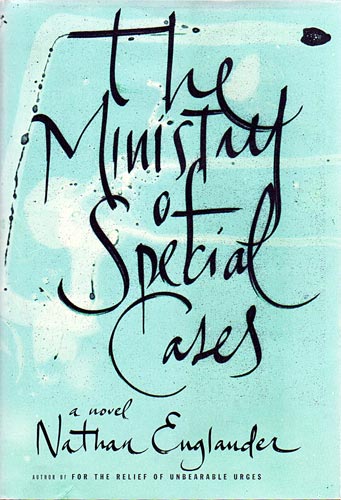
63. The Ministry of Special Cases by Nathan Englander, originally published in 2007. Nathan Englander is one of those writers who needs to write more because his books are always worth the time (all three of them). Like Acts of Faith, The Ministry of Special Cases was a novel that brought to life a specific time and place in my mind's eye. This novel is set during Argentina's Dirty War and swirls around a Jewish family in Buenos Aires. When their son becomes one of the disappeared (and this was a time when anti-government supporters were flown up in helicopters and then pushed it to fall to their deaths in the river below), a father and mother desperately seek relief and aid from the Ministry of Special Cases. It's a Kafka-esque hell of bureaucracy and futility. Fun times!

64. The Dog Stars by Peter Heller, originally published in 2012. I have a colleague who loves this book so much that she still gets emotional when talking about it and she keeps copies at her desk to give to anyone who happens by who hasn't yet read it. Peter Heller wrote nonfiction for years for journals like National Geographic and I feel pretty confident in saying that he writes about nature better than any other fiction writer out there right now. Heller's Colorado setting is a land of beauty, peace, hope, peril, and redemption. The Dog Stars is a post-apocalyptic story of a pilot who manages to survive a killer infection. He's alone in a Denver suburb except for the companionship of a burly, surly man he doesn't particularly like, and his dog. He hunts, he takes his plane out to look for other survivors, and he struggles to keep going. The Dog Stars thoughtfully questions the value of life and what a person needs to keep going when all hope seems lost.