Friday, March 29, 2013

What You're Not Reading, Day Eight

Sometimes you need a good epic adventure novel as a break from all of those uber-cerebral, snooty, literary
works. Doesn't the stream of consciousness get old? Don't you just want to scream "Do something already!?" Sometimes you want to see an Ivory Merchant film, and sometimes you want Batman. I hear your cries.

Child of Vengeance by David Kirk is your palate cleansing novel. Welcome to 16th century Japan, when lords send their samurai to battle and codes of honor dictate warrior behavior. The samurai gives his life to his lord and knows that death is his future; the key is to make it an honorable one. Bennosuke is a teenager dividing his time between learning samurai swordplay and monastic philosophy and worship. His father is the great samurai Munisai, but Munisai hasn't been seen in their village in nine years. Instead, it's Bennosuke's monk uncle who raises the boy. When Munisai returns, though, Bennosuke's worship of his legendary father pushes the boy into the world of the samurai.

Battles. The ritual suicide of seppuku. Prison breaks. Adventure that rivals Sho-Gun, or Pirates of the Caribbean, or Lord of the Rings (without the monsters and wizards and such). Child of Vengeance is, simply, a fun read. Oh, and the character Bennosuke becomes Musashi Miyamoto, the greatest samurai ever and the author of The Book of Five Rings, a war strategy book that is still in print today and read by business leaders and such.

Also, the cover is cool. Judge the book by the cover. This book is awesome.

Thursday, March 28, 2013

What You're Not Reading, Day Seven


University of Texas Press
$25.00

I moved to Texas thirteen years ago and knew immediately that it would be an education. For example, you can’t just walk in and talk shit about George Bush. Neither one. Can’t do it. Plus, it’s rude. I also learned by trial and error that El Paso is too far to drive to just to see two accounts, and you don’t cross the border to check out Mexico. Texas has about twenty-five border crossings, and you shouldn’t cross in El Paso. You idiot.

Ciudad Juarez has a dark history; the first thing I read about it after my trip to El Paso was the unsolved murders of over 300 women since 1993 (that figure is now up over 400 according to a new book by Sergio González RodrĂ­guez called The Femicide Machine which I haven’t read yet but I just ordered from MIT Press). These murders, oddly enough, aren’t what Juarez is known for. A devastating fact is that 400 murders gets lost when they occur over twenty years, or even ten. 

It was only a handful of years ago that Juarez had a murder rate similar to any large city; it was comparable to Houston with an average of around two hundred per year. In 2008, the murder rate was up over 1,500, and the following year reached its all time high of over 2,000. In short, the drug war has claimed 60,000 lives in Mexico since 2007. Twenty percent of drug executions take place in Juarez, therefore what happens in Juarez will have lasting repercussions for the United States and the rest of Mexico.

Ricardo Ainslie author of
Fight to Save Juarez and
Long Dark Road
The Fight to Save Juarez by Ricardo Ainslie delves into the complicated and heartbreaking world that is the drug war in Mexico, Juarez being ground zero. That’s where the book is focused. Ainslie interviewed families of victims, Narcos, Mexican government strategists, (including former President Calderon’s security team), plus individuals in U.S law enforcement. The book is as riveting as it is important.

Here was my take-a-way from The Fight to Save Juarez: While we like to bitch and moan about the problem that is Mexico, the drugs are being consumed here by Americans, and the murders are being committed with assault weapons from this side of the border. The drugs go out and the guns go in, and thousands of innocent people die every single year. 

Wednesday, March 27, 2013

What You're Not Reading, Day Six

The hardest question customers ever posed to me when I was a bookseller was "Can you recommend a
happy/funny book?" I don't read happy books. Actually, that's not strictly true, but I connect more to books with serious themes. Books that aren't the picks you give your aunt who's recovering from surgery in the hospital--that's my sweet spot. I don't think I'm the only book nerd with this problem either. I take note when I encounter a book that has genuinely funny moments and to which I still connect as a reader, a book that you can give to your mom and discuss together and both enjoy.

The Supremes at Earl's All-You-Can-Eat is one of those big-hearted, funny, life-fulfilling books that makes me happy. I was completely invested in the characters and found myself rooting for them, wanting to hear their stories, cheering for them. Think Fannie Flagg. Think sitting in the kitchen listening to your aunts talk to your grandmother as they fix Thanksgiving dinner. This is a book you want to wrap around you.

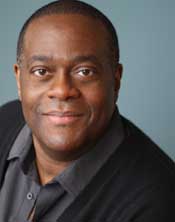
Edward Kelsey Moore
Odette, Clarice, and Barbara Jean become inseparable friends in high school, and as they grow up one thing remains constant--they eat at Earl's All-You-Can-Eat every single Sunday afternoon. Their bond is so obvious that the locals begin referring to them as "the Supremes." They struggle together, fight, make up, and prop each other up through affairs and romances and illnesses. They gossip and laugh loudly.

I think the reason The Supremes at Earl's is so full of love is because author Edward Kelsey Moore did spend his childhood sitting in the kitchen and listening to the conversations, and he remembered the crazy stories he heard. He's a classically trained cellist in his non-writing life, so there's the chance that I would hate him like I hate ridiculously talented people on principle (this is my calling in life), but really, it's impossible to hate the guy who brought Odette to life on the page. These characters really are that memorably good.

Tuesday, March 26, 2013

What You're Not Reading, Day Five


It's not secret to anyone who reads our blog (all six of you), but Liz and I are nuts for short stories. I think we have this in common because we both fell in love with Joyce Carol Oates at an early age, and she is a master of the form. She is also tall and you know how Liz feels about tall people, she finds them to be superior in every way. [Huh? JCO is tiny. But yes, I do think that tall people are superior in every way.]
A rainbow of stories...

Hannah Tinti
Editor-in-Chief @
One Story
and author of
The Good Thief
This is all by way of telling you I am not writing about a book today. Forever the rule breaker, I am going to try and sell you on a subscription to One Story magazine. I hate calling it a magazine because it’s not really a magazine. It’s better than a magazine, yes, even US Weekly.  Every three weeks, One Story publishes, you guessed it,  one story. That’s right, every issue is dedicated to one single story. Why? Because we have trained ourselves to read stories as a group, bunched together in anthologies or an author’s collection. And that’s fine; in fact, some are meant to be read together. But more often than not, stories need to be savored and you lose that by finishing one story and moments later turning the page and starting a new one. 

A.M. Homes, who went
 to a state school
called Sarah Lawrence
One fantastic story shipped right to your door about every three weeks. Yes, you say, but who are these authors, just your run of the mill state school English majors? 

Well, first of all, there's nothing wrong with going to a state school, get off your high horse! Secondly, I just grabbed a few examples from the past couple of years and I am looking at The Omega Point or Happy Birthday Baby by A.M. Homes, The Widow’s Cruse by Emma Donoghue, Girls Only by Karen Shepard, Bad Return by Aimee Bender, and The World to Come by Jim Shepard. See, and they all went to state schools (completely false statement). 

How much? It’s all about money with you people isn’t it? $21.00 for 15 issues, that’s a buck & change per issue, less than a neck massage on a city bus! What, that’s not really a thing? Gross. 


Monday, March 25, 2013

What You're Not Reading, Day Four

Once upon a time, the world wasn't fully mapped, and there were monsters in jungles. Stories like King Kong and Tarzan came from somewhere, right? Right. In 1856, an extremely unlikely explorer, Paul Du Chaillu, walked into the African jungle to hunt a creature that had been considered the stuff of native legend, the gorilla. He was a kid, basically, and one of questionable lineage. His father was a merchant on the African coast but didn't have much of a relationship with his son. His mother was a mystery he held close to his vest. Three years after pushing into the interior, he returned with his prize.

Monte Reel's new book Between Man and Beast is the fascinating story of Du Chaillu and his quest to become a hero in the age of Victorian exploration. This isn't just a book about a man trying to find his place in the world. It's the history of a time when scientific knowledge was the ultimate achievement, when Darwin wrote On the Origin of Species and the hottest ticket in London was to the Royal Geographical Society. It's also a world in which status, wealth, and race mattered as much as accomplishment.

Du Chaillu hiked out of the jungle with the carcasses of gorillas, a major scientific discovery of the time and a link in the primate evolutionary chain leading to humans. He took his show to Broadway--where else?--and the exhibition in New York instantly made Du Chaillu a celebrity. The part of King Kong in which the giant ape is displayed to the gasping gawkers in the theater? That's straight from Du Chaillu's story. From the US he went to England and found himself hailed by the Royal Geographical Society, and he thought he'd arrived.  The explorer, though, didn't have the social credentials or the experience to remain atop the Victorian viper pit of would-be explorers.

Between Man and Beast reads like Erik Larson's books, a multi-layered popular history of a man, a quest, a society, and an age. Scientific theory was turned on its head, and reactions were extreme (evolution led to the emergence of Christian fundamentalism). Great explorer or fraud? Adventure, history, violent critters, danger, scandal--good times. Good read.

Sunday, March 24, 2013

What You're Not Reading, Day 3


Sooo….I had no idea that in the mid nineties the CIA appointed a Hollywood liaison; did you? The CIA was influential in the film business during the Cold War, but it was covert for the most part--a propaganda tool--but in 1996 they actually made it official by opening an office in Hollywood.

Author Tricia Jenkins interviews numerous CIA staff, including operations officers, as well as Hollywood producers and screenwriters who have worked with the CIA.  Specifically, she writes about the CIA’s involvement with TV shows like The Agency and Alias (Jennifer Gardner actually appeared in a recruitment video for the CIA in 2004).

Films such as Enemy of the State, Sum of all Fears, Syriana, and The Good Shepherd (Robert Baer, ret. CIA, provided source material for the latter two) are also written about in depth. The objective of the liaisons to Hollywood is to improve the overall image of the CIA and convince the world of the importance of Langley in a post Cold War world and after the failures of 9/11…I mean was the CIA really effective? Cue the Hollywood music and read the chapter on the show, The Agency.  
We can only assume author,
Tricia Jenkins is under
surveillance 

The CIA in Hollywood asks us to think about the ethics and legality of the power the CIA wields in modern filmmaking. Personally, I don’t think it’s that big of a deal. I mean it’s not like the CIA agents were actually in any of these movies or television shows. It’s not like they were basically helping write the films…oh, they were? Huh.

Tom Hayden wrote a fantastic piece on this book in the Los Angeles Times a few weeks ago, and he includes the controversy of Argo and Zero Dark Thirty.  It’s a jaw dropper. 

oh Jessica...

Saturday, March 23, 2013

What You're Not Reading, Day 2

Gianna: How are you?
Liz: Okay, but I'm on my Friday conference call.
Gianna: Any chance you can meet for lunch?
Liz: Can't. Visiting stores. Everything okay?
Gianna: Yeah, I'm working on blog ideas. Will send you an email a little later.

And then the next thing I know, Gianna is saying that we're going to be posting something every day for, like, 100 days in a row. She doesn't understand that it's March Madness and I need to watch obscene amounts of basketball (Zorro the cat is currently winning my bracket pool, by the way). She doesn't seem to remember that baseball season starts in a week. Also, she has forgotten that she was the one complaining about a 30 day book challenge.

Humph.

Fine.

In the spirit of Gianna's decision to co-opt my life for a third of the year (at least), I'm picking The Antagonist by Lynn Coady as today's book that you aren't reading but definitely should.

Here's the premise: Gordon Rankin Jr, or "Rank" as he's known, is 40, grumpy, and wondering what's happened to his life. And then he discovers that a college friend has published a novel. Then he reads the novel and discovers that the book...is based on Rank's life. He's pissed off; his life has been stolen from him (sound familiar, Gianna?), and he's not afraid to write the author, his former friend, to tell him exactly what he thinks. Thus begins Lynn Coady's big, funny, smart, compassionate book. The book is written as a series of Rank's email messages--many fueled by alcohol--expressing his hurt and outrage, and also Rank's version of his life.

Dear Lynn Coady,
I think we could be pals.
I love your book.
Do you like cats?
Best,
liz
Rank was adopted, and so while his father, a royal pain in the ass and general failure, is a tiny, banty rooster of a guy, Gordon Rankin Jr. is a boy giant. While Gordon Sr. is the guy who throws kids out of the parking lot of his food stand, Rank is becoming an ace hockey player and Gordon Sr. apologist. It's a complex relationship, and Rank believes his life is "King Midas in reverse;" everything he touches turns to shit. Things happen (I don't want to spoil everything). Thus, it's not completely a surprise when he discovers that one of his best friends in college decides to steal his life for a novel, and it's not really a surprise that he's angry.

Discovering new books is one of the best parts of working in Book Land. The best emails and phone calls I receive start with things like "Have you read ________ yet?" or "You have to read _________." The Antagonist is one of those books. It's a book that my fellow book nerds couldn't shut up about. It's really that good. And in case you think we're wrong (and we're never wrong), The Antagonist was nominated for the Giller Prize (Canada's Pulitzer) and genius book critic Ron Charles of the Washington Post wrote this delightful, perfect review of the book.

Oh yeah, and Lynn Coady is a Canadian. I love my Canadians.