Friday, October 23, 2015

Knopf 100--Day 5

I've been thumbing through this book that lists every Knopf publication for its 100 years of existence. It's probably not natural to have such a geeky nerd fandom relationship with a book publisher. I do think that if I tried I could list 1,000 Knopf titles instead of 100. Maybe when we're done with the 100, I'll give it a shot. In the mean time, I should give a shout out to a book called The Art of Prestige by Amy Root Clements. It's not a Knopf publication, but it is a history of the founding of the venerable publishing house. Alfred A. Knopf may have been the founder and leader, but his wife Blanche was the bad ass. The Knopfs were champions of many works in translation and most of these publications were Blanche's finds.

On to the list:

13. Embers by Sandor Marai, originally published in 2001.  Embers is one of those rediscovered classics of literature, a short novel from Hungarian novelist Sandor Marai. In it, an old general sits in his castle with a special guest for the evening, his once closest friend. The two men have been estranged for four decades and the falling out involves the general's deceased wife. You just know that they are going to have so much fun together! I bet they braid each other's hair and try on each other's jackets (they do not). Embers is all about the taut, heated exchange and harsh accusation. It might be the feel good read of the century.

14. A Room with a View by E.M. Forster, originally published in 1923. Forster is a personal favorite of mine, including this gem. Lucy Honeychurch
is off to Florence for vacation and adventure (or as much adventure as a proper young lady of Edwardian England is allowed to have), accompanied by her, ahem, delightful older cousin and chaperone, Charlotte. If I remember correctly, Maggie Smith began perfecting her cranky old dowager persona with the role of Charlotte in the film version. While in Florence, Lucy meets George Emerson, the man who graciously swapped hotel rooms with Lucy and Charlotte after Charlotte through a hissy over her lack of a view. Lucy and George then dance around each other for pretty much the rest of the book, both in Italy and England, as Forster plays with social class and expectations thrust upon "proper" young people.

15. The Boat by Nam Le, originally published in 2008. There are short story collections from unknown writers and then there's The Boat. These seven stories span the globe, from a Colombian drug cartel to immigrants on a boat in the South China Sea, to a partly humorous, partly tense story about a writer named Nam enrolled in the prestigious Iowa Writers Workshop and anxious over the impending visit of his somewhat estranged father. Nam Le, I love you. When will you write more for me?

16. The Infatuations by Javier Marias, originally published in 2013. Maria, bored with her life, frequents the same cafe every morning (do they have Starbucks in Spain?), and over her breakfast she begins to notice the same couple also coming to the restaurant every morning. She imagines them as the perfect couple and takes comfort in their consistency and presence on the periphery of her life. Then, horribly, the husband is murdered. Maria breaks her silence to offer her condolences to the widow, and they become more to each other than mere restaurant smile-and-nod buddies. Maria also meets another man and the plot begins twisting around the dead husband's murder and what really happened. Marias is one of those authors regularly mentioned on Nobel Prize speculation lists and The Infatuations is an excellent jumping in point to discover this contemporary master.


Thursday, October 22, 2015

Knopf 100--Day 4

Yesterday Gianna talked about books she binge read that were published by Knopf. I second her binge-reading of the Ripley novels by Patricia Highsmith. If you liked the movie version of The Talented Mr. Ripley, you'll LOVE the Ripley stories as a whole.

Back to our list of 100 Knopf books for the 100th anniversary of the esteemed publisher:

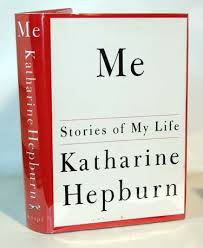
9. Me: Stories of my Life by Katharine Hepburn, originally published in 1991. I don't think I'd ever seen a single Katharine Hepburn movie when I read this book. It was one I found in the stack beside my mother's bed when I was in high school and was desperate for any books of any kind. I knew Hepburn was an actress but that was it.Me turned out to be the best kind of celebrity memoir--thoughtful, juicy, and about a life and career worthy of a full book. In the years since I've seen some of Hepburn's movies and I'm really good at Hepburn questions playing Trivial Pursuit even if I still haven't seen Adam's Rib. 


10. Dispatches by Michael Herr, originally published in 1977. Dispatches is the war reportage book to which all subsequent ones are compared. Michael Herr's reports about the Vietnam War brought to life the conflict and the humanity (and inhumanity) of what was then America's most controversial war. I originally read Dispatches for a college class, but twenty years later I still refer to it when I'm asked for a recommendation about the war.

11. The Looming Tower by Lawrence Wright, originally published in 2006. You want gripping nonfiction that's also impeccably researched? Read The Looming Tower. This is the history of Al-Qaeda from its inception and leading up to the 9-11 attacks, and it's chilling. Who was Osama bin Laden? Where did Al-Qaeda come from? Want a better understanding of extremism and the current state of the Middle East? Read The Looming Tower. Lawrence Wright is a really great writer and there are multiple "holy shit!" moments in this book. It's no wonder it won the Pulitzer Prize.

12. The English Patient by Michael Ondaatje, originally published in 1992. The movie was fine, but this is definitely an instance when the book offers so much more. The characters are richer and a few scenes are different (such as that romantic scene in the movie where Kip hoists Hana via pulleys into the rafters of the church to view the frescos; in the book it's a wonderful scene about art and the destruction caused by war and, well, not so romantic. Hana isn't even present). Ondaatje's prose brings to life the four characters staying over in the Italian villa, from the broken Hana the nurse to the dangerous American spy David Caravaggio to the sapper Kip to the mysterious "English" patient Almasy. I love these characters and this book. It's one I should reread more often and when my friendship with Gianna ultimately leads to my institutionalization, this is one of the novels I'll bring with me to the asylum (or prison).


Wednesday, October 21, 2015

100 Knopf Books Day 3

Before there was Netflix we binge-read authors.  Personally, I have a pretty rich history of binge reading, which started when I would steal my mother’s books out of her room--Michael Crichton, John Le Carre,  and Patricia Highsmith to name a few. I found Anne Rice on my own, but she was well into the Vampire Chronicles by the time found her. To this day in fact, both of my parents read mystery/thrillers, but I find that I don’t read them that much these days. A shame because its sort of how I fell in love with books. 


It’s of my opinion that if the great Michael Crichton had only lived a few more years he could have had given us all an epic “I told you so!” I base this on one book and one book alone: Congo. I read this little gem thirty years ago, so while my memory is foggy on the full plot, what sticks is that the novel has gorillas (or a gorilla hybrid if that makes you feel better) killing humans. Just killing them to death. No tears, just killing them with obvious plans to take over the world. The main gorilla (the good gorilla…of course isn’t that what all gorillas want you to think?) communicates with humans and then saves them from the other vicious hybrid gorillas. Yea, something about diamonds in this book too, but it’s the thought of highly intelligent gorillas killing people that sticks with a kid. Also, I am certain gorillas, monkeys, chimps…we will be answering to them very soon (did you know that Liz is terrified of monkeys and such?). I think I read Andromeda Strain, Eaters of the Dead, and maybe Terminal Man. Later I would read Timeline and Micro (which I just loved), but I have for whatever reason, never read Jurassic Park (or The Lost World), something I am just now realizing. If you read The Martian, go back and read Michael Crichton, it’s all science and nerd fun.

 
I once spent an entire summer in Florida reading Anne Rice novels (indoors, about 100 yards from the beach).  Florida has many things to entice a twenty something and really that’s the way it should be: sun, booze, more sun, volleyball, more booze, a bonfire, a girl fight, police are called, and then more alcohol. All of this on the beach! Anyway, I stayed indoors and read four Anne Rice novels. I saw the film Interview with a Vampire and thought gosh, I wonder if the books are this good! Joke. I must have started in on the books in the mid 1990’s because Memnoch the Devil had just come out. That summer I read Interview with the Vampire, Vampire Lestat, Queen of the Damned, and Tale of the Body Thief (which I accidentally read half of before a librarian hipped me to the fact that I skipped Damned so I had to go back. I was as angry as a book nerd could be). I always think I will re-read this series, one book a month for a year. Anyone want to do that with me?

 Tom Ripley came into my life in the same way so many good things come to me, via Matt Damon. I saw the trailer for the movie and immediately went out and bought The Talented Mr. Ripley. By the time I saw the film about a month later I had read, Ripley Underground, Ripley’s Game (my favorite of the five), and The Boy Who Followed Ripley. I didn’t read Ripley Under Water until a few years ago after I read a biography of Highsmith (she’s a Texan by the way, and that cancels out Ted Cruz). I need to go back and read that Highsmith lesbian novel all the kids are talking about, but I digress from Knopf.


I found John LeCarre’s The Naïve and Sentimental Lover on my mother’s bookshelf in her room. I was must have been in 8th or 9th grade and most likely looking for something as “interesting” as this seemed to promise. I’m still sort of like that when perusing shelves, always looking for something “interesting.” I found myself terribly disappointed by the lack of filthy sex and stopped reading after about fifty pages. A couple of years later however, well, more like twenty years later, I binge read Tinker, Tailor, Soldier, Spy, and The Russia House. What made me go back to John LeCarre? You guessed it…Michelle Pfeiffer. Gosh, I guess I would never read a thing if movies didn’t exist. So proud!


Tuesday, October 20, 2015

100 Knopf Books--Day 2

Gianna's going to be participating in picking 100 of our favorite Knopf titles for the Knopf 100th Anniversary, so that means that I need to pick as many of the ones I've read and loved as I can before she snatches them from me. She's cruel like that. If you missed yesterday's post, you can see it here. In that post I chose the first four Knopf titles of note. Let's continue, shall we?

5. Interview With the Vampire by Anne Rice, originally published in 1976 (the year of our Liz; a momentous year all around). It might surprise some people to know that I've read this book, and it might surprise some people further that I read it based on the recommendation of one of my college professors. Forget about the movie and we're going to pretend that the teen vampire Twilight stuff never happened. Interview With the Vampire is well written, genre defying, literary horror that brought Dracula back from kitschy 70's schlock films to intense, contemporary, humanizing horror fiction. The story of Louis confessing his life's journey with the charismatic Lestat to a skeptical kid reporter was a new angle in horror fiction and makes for addictive reading even today.

6. Mildred Pierce by James M. Cain, originally published in 1941. I read Mildred Pierce relatively recently, wanting to read the novel before watching the HBO series with Kate Winslet. I think it's a terrific book. Mildred is a tough woman trying to support herself and her daughter after leaving a bastard of a husband. While working as a waitress, she scrapes her way out of the working class and supports her daughter's burgeoning music career. Mildred has a weakness for the wrong type of man, though, and her daughter is, well, simply a nasty human being. I love Mildred because she's super strong, and the book can be read as feminist noir fiction. Also, Los Angeles is front and center as the perfect backdrop for this story.

7. Plainsong by Kent Haruf, originally published in 1999. Oh, the humanity! I love Kent Haruf's novels, starting with this one, Plainsong. The story of two older men taking in a teenage girl down on her luck is filled with the humanity and human decency rarely found in contemporary fiction. Plainsong is a lovely ode to human goodness and compassion and the pleasures and pitfalls of small town life (in small towns they'll gossip like no one's business, but they'll also prop you up when no one else will...also, LOTS of casseroles). Haruf passed away earlier this year and his death rocked the Knopf office because he was so universally beloved. Reading Plainsong gives a glimpse of the man's spirit.

8. The Book of Aron by Jim Shepard, originally published in 2015. First of all, Jim Shepard is a genius writer and everyone should be reading his work. While mostly I associate the National Book Award finalist as a short story writer, The Book of Aron is a short novel about...a kid named Aron. I hope that didn't spoil anything. Anyway, Aron is the troublesome kid in school who "can't learn" and won't sit still and is a constant worry to his parents. Life changes for all of them, though, when as Jews they are moved to the Warsaw Ghetto. Aron's horrible behavior in a classroom actually makes him ideal for such acts as sneaking around the ghetto and over the walls in search of food and supplies. He's a black market god, but as conditions worsen, he's also faced with more and more difficult decisions. The Book of Aron is a multi-layered novel that suggests on the one hand that a boy shouldn't be held responsible for making impossible decisions in the worst situations, and yet, isn't he also culpable? It's a thoughtful, complex, fascinating novel, and one of my favorites of the year.


Monday, October 19, 2015

100 Knopf, or The Big Anniversary in Book Land

Back when I was a bookseller contemplating making the leap to publisher sales rep, a huge factor in making that decision could be summed up simply as "Alfred A. Knopf." Knopf, simply, is one of the greatest publishing houses in the world and I love just about everything Knopf publishes. 2015 is the Year of Knopf, the 100th anniversary of the founding of the venerable press, so we're offering 100 titles that exemplify what makes Knopf great.

First, let's set the scene:


Feeling inspired to dive into great books yet? Good. Let's get started.

1. Sula by Toni Morrison, originally published in 1974. The story of two friends, this is my favorite of Morrison's books and the one I reread most often. Nel and Sula grow up together, the prim and proper good girl and the child with no inhibitions, sharing comic moments, dark secrets, loyalty, and then betrayal. Morrison's novel captures the intensity of best friends as well as the potential for pain that comes from loving another person. All of the elements that made Morrison a Nobel Prize Winner are on display in this masterpiece--beautiful writing, eccentric characters, passion, pain, and that feeling that you're reading something profound that requires thought and discussion.

2. An Unquiet Mind by Kay Redfield Jamison, originally published in 1995. I am not bipolar, but I am far too introspective and obsessed with my mind, so of course I've read Jamison's classic memoir of her struggle with bipolar disorder. This book is a landmark example of how to write a personal narrative that transcends one's own particular story, and in reading about her struggle and work with mental illness, I found greater compassion for myself and others. I highly recommend all of Dr. Jamison's works, but definitely start here.

3. Hiroshima by John Hersey, originally published in 1946. What did the first nuclear weapon do to the people and city where it was utilized? Note the date--Hersey was interviewing people who survived the atomic blast of Little Boy just after it was dropped and the war ended. I'm fascinated by the impact of nuclear weapons on the world in the last seventy years, and Hersey's book is critical reading for understanding a nuclear world.

4. The Narrow Road to the Deep North by Richard Flanagan, originally published in 2014. Last year's Man Booker Prize winner is a novelistic wonder. Set mostly in a Japanese POW camp during World War II, Flanagan combines the struggle of POW Dorrigo Evans as he struggles to survive and keep his fellow POW's alive in increasingly horrifying conditions while building the Burmese railroad. The narrative jumps to contemporary Australia and to before the war when Dorrigo was in love with a girl before shipping out; it shows the humanity and inhumanity of the POW's as well as their Japanese captors. When I read this novel last year, I remember thinking "THIS is why I love working with books and with Knopf."


4 down, 96 to go. 


Tuesday, October 13, 2015

A Brief History of Seven Killings--the Man Booker Prize Winner for 2015

Just announced--Marlon James has won the Man Booker Prize for his novel A Brief History of Seven Killings. Just for you, here's what you need to know about this newest winner of one of the most
prestigious literary prizes out there.

  • Jamaica. The country is as much a character in the book as the humans who populate the book's pages. The novel details the history of an island transitioning from poverty to a nation with tourism, extreme wealth, and little in the way of a middle class before you hit the poverty again. 
  • It's written from the points of view of multiple characters, including a reporter, some gangsters obsessed with Spaghetti Westerns, and the crew in and around a singer who's obviously Bob Marley. 
  • The language--Marlon James does a remarkable job of setting scene and immersing the reader into the island culture, and much of that is accomplished through the dialogue. Characters speak in Jamaican patois, mon. 
    Marlon James
  • There's humor here, even though it's a violent story that flat out tells you people are going to be dying. This isn't A Brief History of Seven Near Misses at the Ladies' Auxiliary (though I'd totally read that book too). These are dangerous streets, but the humanity of the characters and their flaws often make them funny. 
  • Marlon James is from Jamaica. He knows his subject. 
  • A Brief History of Seven Killings also won the American Book Award and has been named to just about every best book list of 2014/2015. 
  • What's it about? Just before the elections in 1976, a group of gunmen raided Bob Marley's mansion, critically wounding the singer. The event was mostly covered up, but a dogged reporter is relentless in tracking down the real story while also covering the island's election cycle. Who were the shooters? Why were they shooting? What's so great about jerk chicken? (No need to read the book to answer that last one; jerk chicken is proof that Jamaica is heaven on earth.)
This year's list of nominees for the Man Booker Prize--A Brief History of Seven Killings, A Little Life by Hanya Yanagihara, Satin Island by Tom McCarthy, a personal favorite coming out in the spring called The Year of the Runaways by Sunjeev Sahota, The Fishermen by Chigozie Obioma, and A Spool of Blue Thread by Anne Tyler--are a stellar crop of novels and a testament to the quality fiction published in the last year. 

By the way, there's a site that will tell you your reggae name, and Gianna's would be Ras Tuff Gong Culture Bong. Yes, you have permission to address Ras as such from here on out. 

Saturday, October 3, 2015

Time to Dust Off the Blog--I SAW A MAN by Owen Sheers

I don't know how you all have managed to cope without this blog regularly posting, but given that the best entertainment available right now is the GOP primary race, I feel like we need to fill a gaping cultural void. Unrelated: last month Gianna decorated my yard with Donald Trump signs, so this blog is now accepting all ideas for retributive pranking. Comment below.

This is what Gianna did to my yard. We must plot revenge.
So if we hadn't been ignoring the blog back in June, I would have been singing the praises of I Saw a Man, the new novel by Owen Sheers. Sheers is a great writer; if you're a fan of Ian McEwan, you'll like Sheers. Also, with this, his second novel after the strong debut effort Resistance (a terrific book that imagines a Welsh village's reaction to Nazi invaders, should the German invasion of Britain have taken place in World War II), Owen Sheers has managed to provide a legitimate "HOLY SHIT" moment in literature. I gasped, and that's not an exaggeration.

I Saw a Man weaves together a few stories, but mostly circles around a man named Michael. His wife, a journalist named Carolyn, was killed in a drone strike while she was meeting with an Afghan warlord. Michael is understandably distraught over the death of his wife and moves to a new flat in London to begin his life again. He soon befriends his neighbors, a couple named Josh and Samantha, and their two children. While grieving, a catastrophic event further alters Michael's, Josh's, and Samantha's lives in an instant.
This is Owen Sheers.
He's dreamy. 

Woven into Michael's story is the story of the drone pilot in Las Vegas who had piloted the craft that killed Michael's wife. I Saw a Man focuses on the instants when lives change. Accidents happen that can shake us to the core, and how we deal with shock, anger, grief, and the emotions that come with disaster are at the heart of this novel.